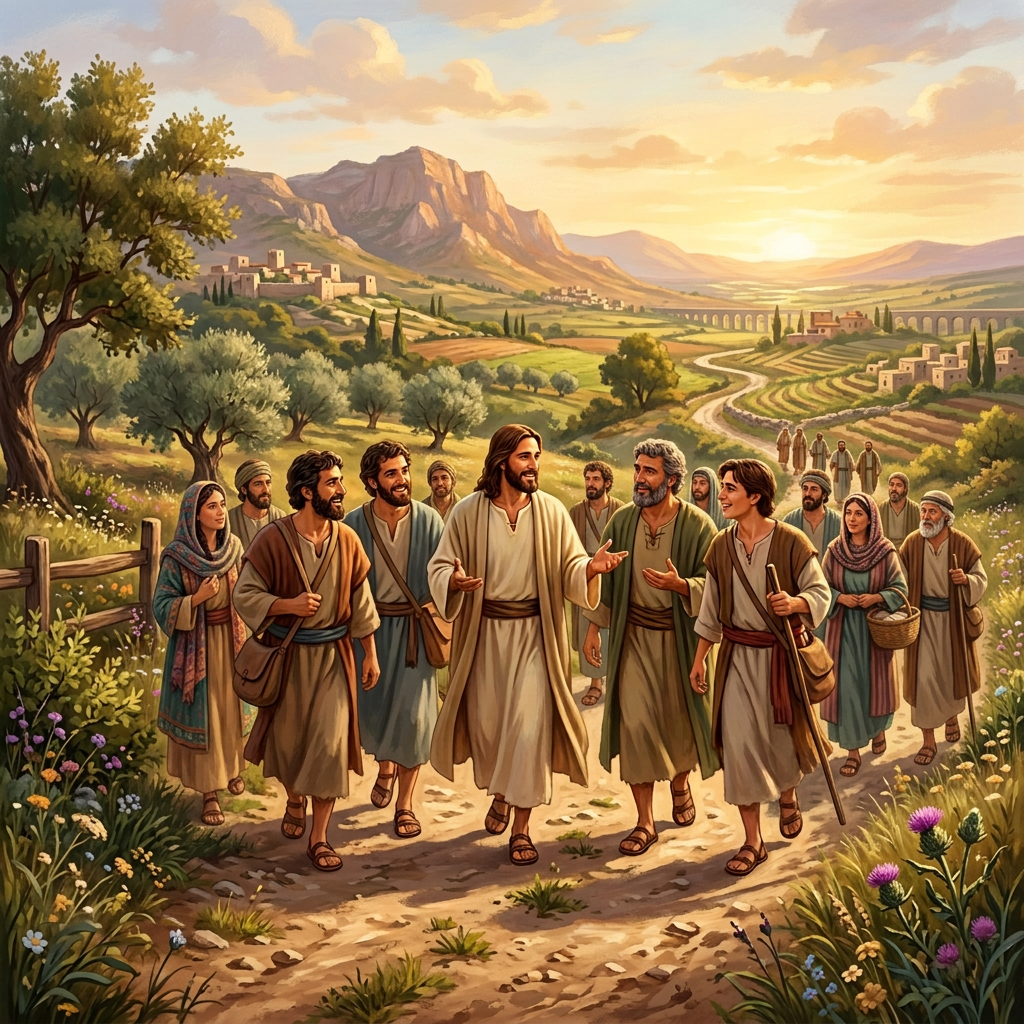
Why are the disciples different from the crowd?
There is a section from the Gospel of Matthew (13:10-17) in which the disciples ask Jesus why he talks to the crowd in parables, and Jesus’ answer has never really been that satisfying to me. Basically he says, you guys are special, so you get the decoded version; the crowds just get the stories without the decoder ring.
But why?
In the Last Supper Discourse of the Gospel of John (15:12-17), Jesus says something similar:
This is my commandment: love one another as I love you.
No one has greater love than this, to lay down one’s life for one’s friends. You are my friends if you do what I command you.
I no longer call you slaves, because a slave does not know what his master is doing. I have called you friends, because I have told you everything I have heard from my Father.
It was not you who chose me, but I who chose you and appointed you to go and bear fruit that will remain, so that whatever you ask the Father in my name he may give you.
This I command you: love one another.
The “sandwich effect” of opening and closing the section with the same statement is a device to section off this as one cohesive packet of rhetoric (plus, it underscores how important the “love one another” thing is). And within this packet, Jesus offers a couple reasons why the disciples might stand apart as friends:
1) They do what He commands.
2) Jesus has told them everything.
3) Jesus chose them (and not vice versa).
OK. Except the disciples, based on everything else we read in all of the Gospels:
- Don’t do what Jesus commands. From Peter to Judas, with the possible exception of John, this group abandons Jesus when the going gets tough. (Jesus would have done so much better to stick with the women in His story, who are much more faithful disciples.)
- Don’t understand what He tells them. This is a consistent theme throughout all four Gospels. While that Matthew passage sounds like a Gnostic-like communication of some secret-squirrel wisdom that is hidden from the world, if you read the Gospels, it’s pretty clear that this is not the crew to entrust with any difficult secrets. Every time Jesus says something about how His story is going to go, He is essentially greeted by a bunch of blank stares.
- Aren’t the only ones He chooses. You might recall the rich young man (especially Mark’s version of the story in 10:17-22), in which Jesus invites the man to join them, and he turns Jesus down.
Now, look, I’m pretty sure most Christian traditions will at least rally around the truth of that third point – that the haplessness of Jesus’ disciples speak to the truth that any relationship with Jesus doesn’t come through our own merits or even our natural potential but through God choosing us. I raise the rich young man only to say that there’s something to be said, if you believe in free will, for the idea that, even if God makes the first move in our relationship, we still can decide how we respond.
So, let’s say that what sets the disciples apart is that Jesus has called them and they have bought in. One could argue that the crowds that keep showing up might also only be there because God has nudged them there, and they have responded with enthusiasm, often mobbing Jesus or running around the shore of Galilee to chase down his boat.
So why are the disciples different from the crowd? Let me offer a non-Biblical (but hopefully not heretical) suggestion.
I’ve been thinking about what Catholic author Matthew Kelly calls “carefree timelessness”. This is the sort of “wasting time” that couples in love spend, doing nothing together. For Gen Xers, this was spending hours tying up the family phone while not really talking about anything. For today’s young lovers, I’m told, it’s FaceTiming each other while you go about your day. You’re not doing or talking about anything particularly productive or intense or important; you’re just enjoying the presence of the other.
The lack of carefree timelessness can kill a loving relationship. When the world gets busy and couples only have time for each other when engaged in running a household or parenting a child, marriage can feel less like love and more like being a business partner or project co-manager, because the time is all transactionally focused and not relationally invested. Eventually, those of us blessed with a marriage learn this lesson, one way or the other. Never stop dating your spouse.
On the positive side, wasted time together matters, and not just for romantic relationships. Nothing newsworthy is happening during the “just hanging out together” times, but that’s where relationships get built. It’s true for marriages, and it’s true in parenting and sibling relationships, which is why people often remember the parts of family vacations that aren’t the destination but the journey. It’s true with work relationships, which is why the value of in-person meetings and conferences is almost never found in the content of the sessions and almost always found in the conversations in the lobby. It’s true with friendships among neighbors we shoot the breeze with while out getting the mail, or anyone else we’re willing to invest “unproductive” time in.
It might be that this is the difference between the disciples and the crowds. It could be that, for the crowds, engaging with Jesus was primarily transactional. They came to seek healing or wisdom or direction from Him, for themselves or for those they loved.
But the disciples were the ones who wasted time with Jesus. What the Gospels don’t dwell on is that, during the three years of Jesus’ ministry, he and his companions spent a lot of time not “on stage”, going off to pray, sure, but also just walking from place to place, camping for the night, etc. The series The Chosen shows some glimpses of this that help remind us that most of life happens between the big moments.
So I’m thinking that it’s probably true with God, too. Jesus’ relationship to the disciples isn’t different than with the crowds because they are brighter or more obedient. It’s because they invest the time just hanging out with Him, walking in silence or chattering about stuff that isn’t Divine Revelation. While it’s true that we don’t have the ability to wander around the Galileean countryside anymore, it’s comforting to know that, when we don’t have any particular gifts or skills or wisdom to bring to the table, we still can offer God the most important thing through our willingness to waste time together.


Leave a Reply