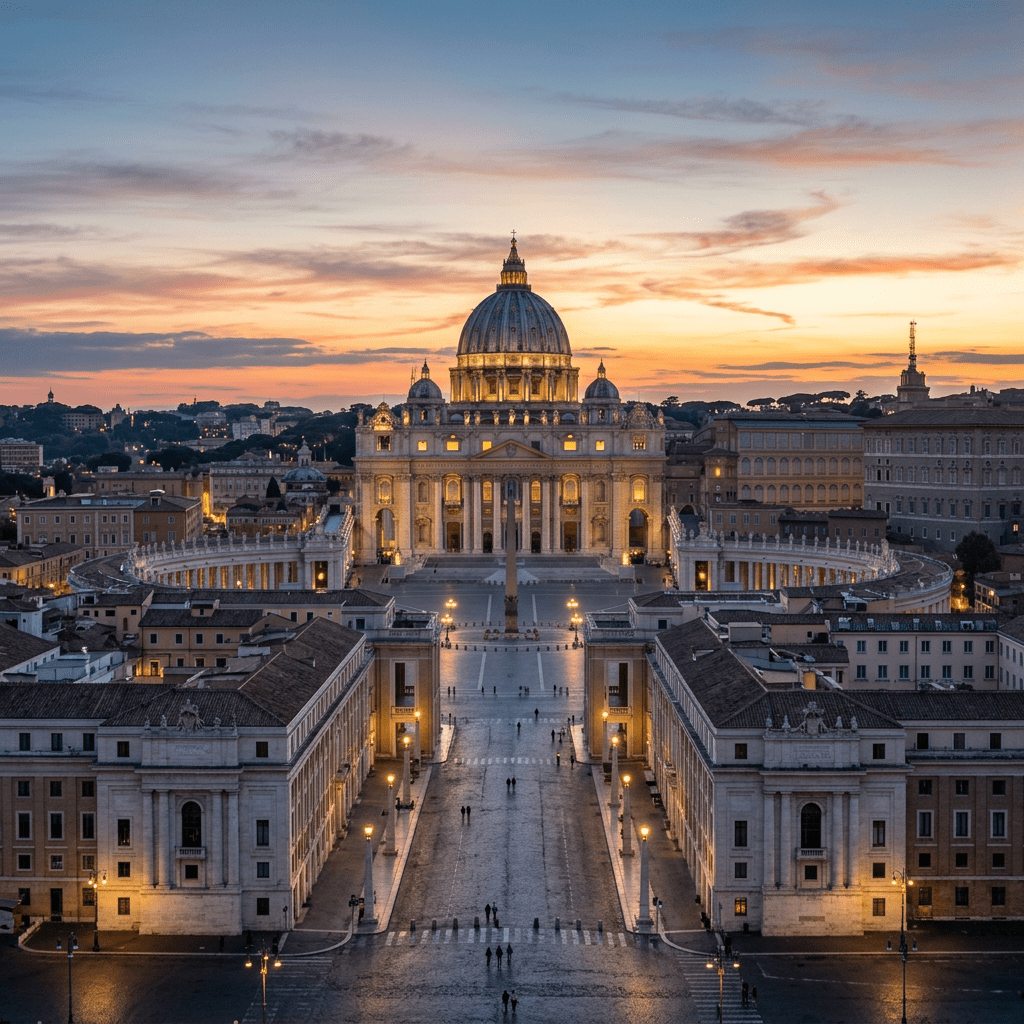
If reports are true1, Pope Leo XIV will release his first encyclical on May 15th, titled Magnifica Humanitas (Magnificent humanity). Since this is unrelated to my day job, I will almost certainly not be among the first to read and report on this, so I wanted to try to flag a few things in advance for my friends who do not live and breathe this kind of thing.
- Papal encyclicals: These are relatively rare doctrinal teaching documents that a pope issues. (Pope Francis released four in his 13-year pontificate.) While not making dogmatic declarations, (and not speaking infallibly), when a pope releases an encyclical, it’s meant to contribute to church doctrine in a significant way. Popes have lots of other channels for sending messages, but encyclicals tend to be the big deals.
- Legacy of Rerum Novarum: You might remember that, when he was elected pope, then-Cardinal Prevost selected the name Leo as a reference to Pope Leo XIII, whose encyclical Rerum Novarum, written to outline Catholic social teaching in response to the economic, political, and cultural disruption of the Industrial Revolution, is generally considered to be the first papal contribution to Catholic social teaching. Several popes intentionally released (or planned to release) encyclicals on major anniversaries of the May 15, 1891 release of Rerum Novarum as a way of highlighting, updating and expanding Church social teaching: Pius XI (40th), John XXIII (60th), Paul VI (80th), and John Paul II (90th2 and 100th) all followed this model. Thus the release date for this one, on Rerum Novarum’s 135th anniversary marks a return to this tradition after Benedict XVI and Francis did not release social encyclicals on anniversaries. (Francis’ two major social encyclicals, Laudato Si and Fratelli Tutti, were released on non-anniversary years.)
- Title: The title is the first two words of the Latin (official) version of the document. That, plus a Friday release (a slow news day), show that the Vatican still sides with tradition over marketability and communications sensibilities.
- Expect big things: It’s been said that Leo wants to talk about artificial intelligence (AI), but I would expect this not to be a relatively narrow document (like Paul VI’s Humanae Vitae, which focused specifically on articulating Catholic teaching on birth control), but one that treats AI as a source of broad disruption of the economy, politics and culture, just as the Industrial Revolution was. Whether or not you’re Catholic, you may not be aware with the breadth of Catholic social teaching, because the Church only gets attention for a few hot-button culture war issues.3 The US Conference of Catholic Bishops (USCCB) has been highlighting seven different principles of Catholic social teaching during the Easter season on social media, but you can also catch up through the resources on their website. When you think about it, all seven themes – the life and dignity of each human person; subsidiarity and the ordering of community; rights and responsibilities; the preferential option for the poor and vulnerable; the dignity of work and the rights of workers; solidarity; and care for God’s creation – all face challenges by the current trajectory of AI’s development and adoption. I would be surprised if this encyclical is “only” a primer on ethical use of AI, as much as that is needed.
- Avoid the temptation to make this all about the US: One thing that I haven’t seen reported on much that could become a big deal is that Leo has consistently criticized an obsession with stock market results over other measures that better reflect how an economy is or isn’t serving the common good, especially the most vulnerable. I keep waiting for someone to portray this as a Leo-vs-Trump item, given that the Administration regularly uses the record-setting stock market as a justification for any attack on their agenda. Truthfully, Leo’s critique of a Dow Jones-centric view of the economic world is consistent with what popes across the board have said since Rerum Novarum. I would be surprised if it weren’t a theme in this encyclical, nor would it surprise me if it’s played up by those who want to spark another anti-Leo response from President Trump.
- Media matters: I see a lot of social media posts about the pope from sources that are primarily engines of American partisanship. Sometimes they are completely untrue; other times they are misconstruing facts to fit within an ideological context. I wish that Ad Fontes would put out a media bias chart specific to Catholic journalism, similar to the ones they do for US and world journalism in general. Lacking that, know that there are Catholic and secular media outlets across the ideological spectrum who have dedicated Vatican reporters. Ideally, you should try reading the encyclical itself – it will be available at vatican.va for free, and should be really well-written, based on what we’ve seen from this pope – but if you really just want a quick rundown, at least try to restrict yourself to outlets with a dedicated Vatican beat. Start with the Vatican’s in-house shop, Vatican News, which will have a suite of stories. OSV News, and Religion News Service are two I’d recommend for down-the-center coverage, as well as secular wire services like AP and Reuters. Thoughtful commentary outlets range from Commonweal on the left to America, National Catholic Reporter, Crux, First Things, The Pillar and EWTN, the Fox News of Catholic media. There are even some blogs worth reading, lol.
One off-the-beaten path angle: When I get a chance to read it, I’ll try to share my thoughts, unless they’re redundant to the great analysis that I know will be coming from the pros. The one thing I’m likely to focus on (that others may not) is the footnotes. Not because they are likely to be a source of controversy (which they can be!4), but because Francis was unusual in the breadth of sources he cited in his encyclicals. Normally, you see references to the Bible (obviously), predecessor popes, Vatican II documents, and other things that the particular author-pope has written or said. Sometimes, you’ll see references to prominent Catholic theologians (there should probably be a prediction market on how many references to Augustine we see). But Francis included poets, non-Catholics, and (my favorite) statements by bishops’ conferences from all over the world in a way that broadened the Church’s understanding of where wisdom resides. I’ll be curious if Leo follows that example or returns to tradition. My guess is that he sticks to the basics, since there are so many anniversary documents, he’s already said a lot in his various addresses (and his apostolic exhortation, Dilexi Te), plus Augustine. But if he does call out the bishops of, say, Oceania, or Africa, it would be a subtle way of underscoring the need for a synodal church to listen to those at the margins.
- It now appears the reports were not, though this encyclical will likely be dated May 15, regardless of when we actually get to see it. ↩︎
- John Paul II’s Laborem Exercens was scheduled for release on May 15th, but he was the victim of an assassination attempt a few days before, so it was postponed until September. ↩︎
- To be fair, until very recently, the leadership of the USCCB seems to have been pretty content to just focus on the culture war issues. ↩︎
- One of the biggest controversies of Francis’ pontificate stemmed from a footnote (#351!) in an apostolic exhortation (not even an encyclical!) about married love, Amoris Laetitia; in fact, Pope Leo has scheduled a big meeting of bishops this fall to come back to that document, probably in part to smooth over the kerfuffle of the footnote. Remind me why the Church has a rap for being too self-absorbed? ↩︎


Leave a Reply