OK, so, when you’re too sick to go to any of the Christmas masses, part of the makeup assignment is to read the readings for all the variations of masses – Christmas Eve vigil, Christmas mass during the night, Christmas mass at dawn (which probably isn’t too crowded), Christmas mass during the day. It’s not the same as fighting for a seat with a lot of other overdressed people who are angling to get video of the kids’ choir, but still.
There was a non-Christmasy line in one of those readings from Acts 13. Paul is telling a group about the promised Messiah and says, toward the end, “as John [the Baptist] was completing his course, he would say, ‘What do you suppose that I am? I am not he. Behold, one is coming after me; I am not worthy to unfasten the sandals of his feet.”
“Completing his course.”
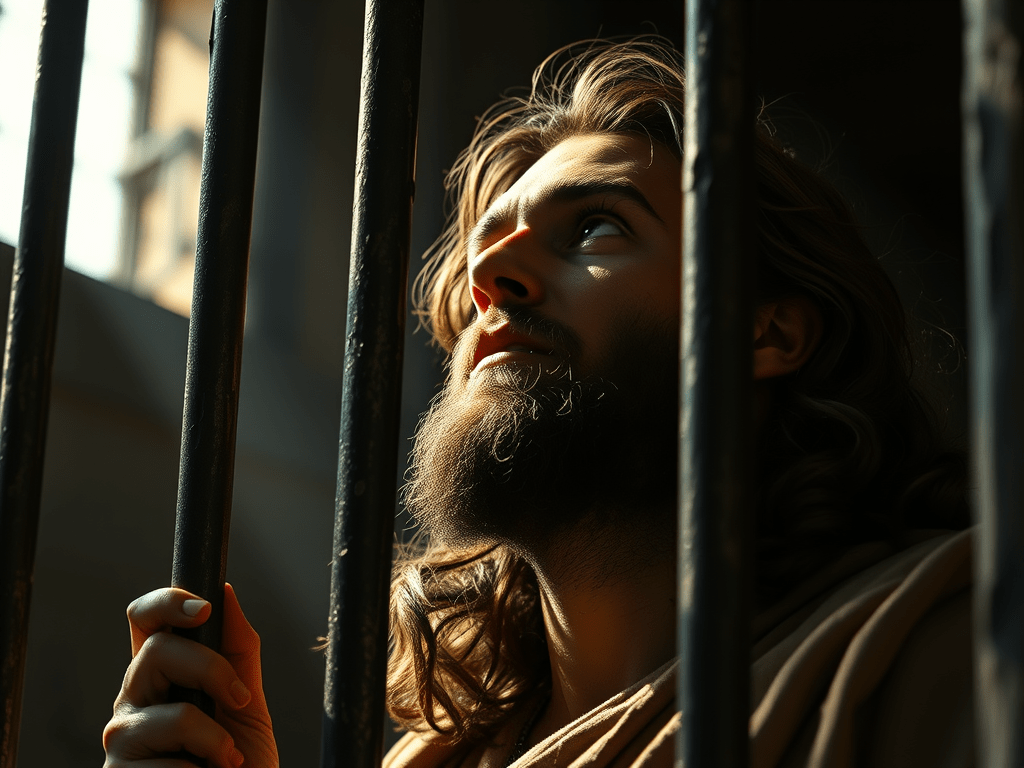
Here’s the thing: anyone who knows the story of John the Baptist (which the author of Acts covered in his other book, the Gospel of Luke), would know that his ending was not what you call a tidy completion of his course. He was a prophetic preacher who rankled the powers that be until a king against whom he had railed imprisoned him, yet continued to listen to him, until his wife had him beheaded. (That’s the short version.)
Maybe John the Baptist was surprised he’d made it that far before being executed, given the audacity of his message.
Maybe he thought that, having made it this far and having confidence that he would see the coming of the Messiah, he would survive this imprisonment and keep on keeping on.
But there’s no evidence that, once imprisoned, he thought, “OK, I’m done. I’ll just wrap up here.” It seems likely that the timing of his beheading was a surprise to him, given the story.
The author knew this, and it seems likely that Paul did as well, as deeply grounded as John the Baptist’s beheading is in the early traditions of the Church. Maybe, though, since Paul wasn’t really telling John’s story, but Jesus’, this shorthand phrase (which is consistent across translations and generally fits the original Greek) was the elegant way to move the point along.
Still, the phrase struck me. The Broadway show Hamilton uses a phrase, “who lives, who dies, who tells your story,” as a motif to capture the capricious nature of history. A lot of the nuance in a life gets boiled out, depending on who the narrator is. So it is with Paul’s recap of John the Baptist’s witness.
What struck me was the realization that, for most of us, our perspective probably won’t be that we “completed our course.” We might be lucky enough to outlive our ambitions; I know some people who survived their loves and wish they hadn’t. More likely, our life’s ending will come before we’ve tied up all the loose ends. There is a high likelihood that there will be unchecked items on our to-do list when we pass on.
I suppose that others may have a better perspective on whether or not we “complete our course”, and in hindsight, perhaps it will be clear that we have. In the here and now, though, we might sit with the inevitable loose ends in our life and mull whether their prospect should prompt us to take them, and ourselves, less seriously, or conversely, to push through to cross off the absolutely essential ones.

 Reading Francis
Leave a reply to b27schwarz Cancel reply