This year, I sort of missed Christmas.
For whatever reason, it seems like Christmas is a time when people in our family get sick. For some, it’s the pace of work at the end of the year; my sister-in-law who worked in bookstores often collapsed when the stores finally closed for Christmas, for instance. For some, it’s the excitement of the season; when my parents were older, they would often be laid low for the holiday by the exhaustion of preparing and waiting for all their far-flung family to come home. For others, it’s the travel; this year it was my turn to be done in by the fact that Disney World at Christmas time is both a magical wonderland and an international germ convention. Regardless, it’s not that unusual for someone to be fighting a virus or two at Christmas. This year, it was me.
You hate to be the one who’s sick at Christmas, but I think it can be as hard or harder on your loved ones. As we were digging out decorations this year, we found an old diagram from many years back, when our daughter was little, and a case of bronchitis knocked her out for Christmas. Even so, she diagrammed out for us where the cookies and milk should go for Santa and where the carrots and other food should go for the reindeer. I remember it being so sad to see our kid too exhausted to generate any excitement about a day she’d spent weeks (months?) looking forward to. Likewise, when you don’t get home very often, you really feel the loss of time with a loved one who is holed away in a back bedroom with their germs, rather than out in the living room with the rest of the merriment.
This year, I mostly missed the opportunity to go to Christmas Eve Mass and see people from our faith community who normally go to different services than we do. And, of course, even more than that, I missed the liturgical celebration of God’s immersion into our lives in a new way as one of us.
It had me thinking, though, about all the people who missed Christmas the first time. Sure, shepherds came, but they returned to the flocks to tell others what they had seen, which means that some of their coworkers must have said, “Y’all go ahead with the angels. We’ll stay back and keep an eye on the herd.”
Or think about the folks at the inn. The story goes that the town was full of people and all the inns had “no vacancy” signs out, and yet I don’t know of any tradition, much less a canonical story, that references any of the local residents of Bethlehem or any of the fellow visitors coming to check on this newborn and his family.
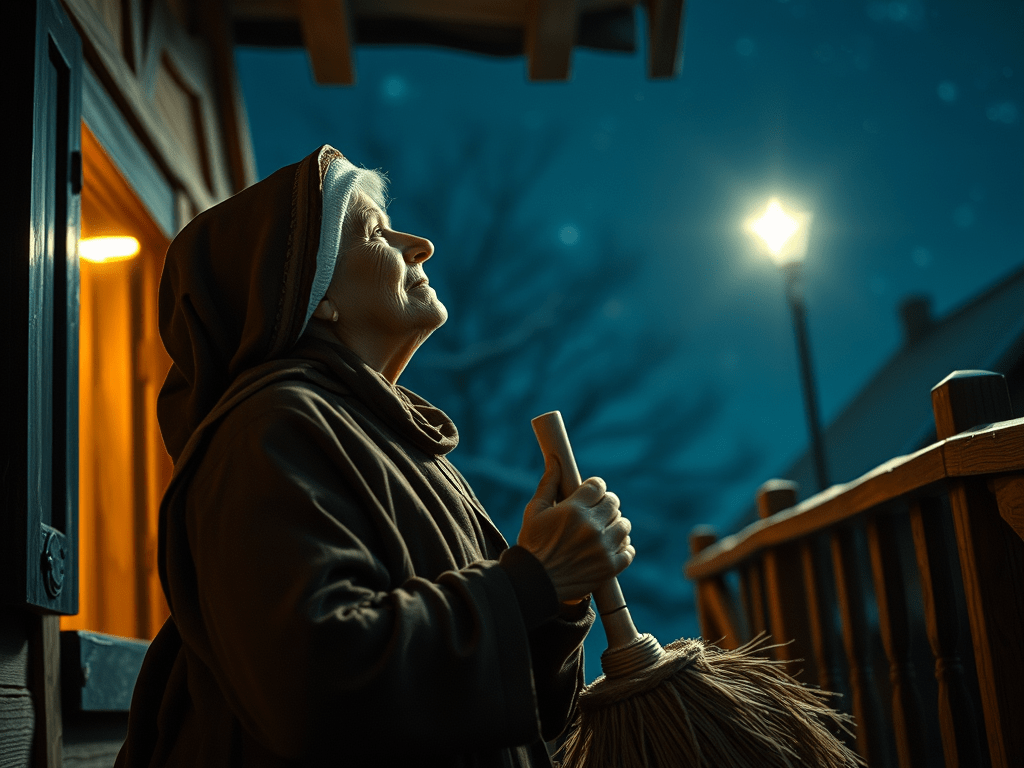
There’s an Italian Christmas figure called La Befana who has a story along these lines (at least as told by the folks at Disney). La Befana was an old woman who lived along the route the magi took from the East to Bethlehem, and when they stopped to ask her for directions, they invited her to join them in her journey. She declined (the EPCOT storyteller sagely points out, “A lone woman, leaving in the middle of the night with a bunch of strange men? Not a good idea.”), then reconsiders, but by the time she’s ready to set out to follow them, both they and the star they were following have disappeared.
La Befana’s response to this disappointment, in the legend, is to visit children on the Eve of the Epiphany (Jan. 5) while they sleep and leave a gift for each one, just in case one of the ones she visits happens to be the Christ child. It’s a sweet story that is reenacted and retold centuries later, and has made this figure who missed the first Christmas a beloved part of hundreds of its successor events.
When you’re a kid, Christmas Day feels like everything, and missing it feels like a tragedy. At my age, it’s still a bummer, don’t get me wrong, but you realize a few things. First, that’s life. Everyone gets sick or has to work late or otherwise has a life disruption; occasionally, that coincides with Christmas. The world still turns.
Second, and maybe more importantly, missing Christmas Day doesn’t really mean you missed Christmas. The friends and loved ones that you didn’t get to celebrate with? They’re still in your life, and while you may have to work a little harder to connect with them when they aren’t all under one roof, it’s probably worth the work. The liturgical celebration of God’s Incarnation may not have the same pomp on other Sundays, but it’s still the same God, and a lot of the same people. Even if you missed your child’s performance at the early service, there’s a better than average chance that they’ll give you a solo concert when you’re up to it.
I was lucky enough to be semi-functional by late afternoon on Christmas Day (and am fine now, thanks), but even if I hadn’t been, I’ve learned: missing Christmas is hard, but how you respond matters. It can be a tragedy, if you let it. But if, like La Befana, you chase after Christmas hard enough, you can still catch the spirit of the feast, even after the fact.
 Reading Francis
Leave a comment