Yesterday, October 4, 2023, was kind of a big day in the Catholic Church. The current pope, Francis, did a couple of things that haven’t been done before.
The bigger of those things was the launch of a new phase of gathering the Church together to discern what God wants us to do. This gathering, clunkily called the “Synod on Synodality”, started at the local level a couple years ago and, on 10/4, started the first of two global gatherings of several hundred Catholic leaders, who will spend about a month together listening for divine guidance on where God wants the Church to go.
This has not been universally popular.
There have been synods since, well, since the apostles hid together waiting for the hammer to drop, only to have the resurrected Jesus walk through the door, literally, on Easter Sunday. While Roman Catholics got out of the habit of gathering to discern what to do sometime in the Middle Ages, since the Second Vatican Council in the 1960s, they have dutifully held synods. Those, though, only included bishops, always had a specific topic, and generally did not allow open discussion beyond rubber-stamping what the pope already had decided. As someone who studied politics during the 1980s, I see some similarities to the Politburo meetings in the Cold War USSR.
Since being elected as pope in 2013, Francis has done these differently, encouraging open discussion, even to the point of inviting controversy into the room. This one, though, is way different. For the first time, there are women and lay people who are participating fully; not just expert speakers, they have an equal vote to the pontiff and cardinals. I heard (but have not verified) that there are as many women participating in this as there are members of the College of Cardinals who will vote on the next pope, whenever that time comes. For a thing formally called the “Synod of Bishops,” this is a big change.
The fact that this started with listening at the local level, parish by parish, and has bubbled up to this two-part session, is similarly remarkable. The previous Pope Francis-era synods included some baby steps toward listening. Think poorly promoted, diocese-wide SurveyMonkeys. This time, the Church devoted more than a year to gathering input, with a focus on those on the margins. It wasn’t perfectly executed everywhere, but when is a first time ever perfectly executed?
All that listening has been panned by people who think that the Church already has all the answers. If Catholic Doctrine is perfect and infallible, why listen to what anyone else has to say? It will either be something you already knew or it will be wrong. So say the more traditionalist Catholics who still grouse about the Reformation the way that some of the folks I grew up with in Jacksonville grouse about the Civil War.
Now that the synod participants have gathered at the Vatican for this global stage, I think we’re about to see another group of people turn against this synodal process. So far, the attention has followed the heat. Issues like ordaining women as priests or blessing same-sex marriages or sharing the Eucharist with divorced and remarried people have been the topics that synodal listening process has surfaced as the things worthy of media coverage.
But now that this thing is starting for real, Pope Francis has reminded participants that the point of this is to listen to each other to discern where God is speaking. And that does not lend itself to quick programmatic changes. I can’t predict the future, but the betting money is that the hundreds of synod participants will leave at the end of the month without significantly changing the Church. And next year, when they reconvene, they may not make any more “progress” on those fronts. And when the pope takes whatever they give him from this long process, he probably will not launch some sweeping doctrinal reform, either. Because the point of this is to listen for God’s guidance, and that requires quieting all the other voices, and as a result, usually moves slowly.
As slow and uncertain as all that is, it’s striking that Pope Francis did another thing on October 4. Less than a decade ago, he had released a papal encyclical, called Laudatory Si’, that elevated environmental concerns to a new moral and theological level in Catholic teaching. For a Church that moves notoriously slowly, Francis waited only eight years before releasing a follow up document, Laudate Deum, to double down on the urgency for Catholics and all people of goodwill to respond to the threats of climate change. Popes have released sequels before, but never so quickly. If the synod is about slowing down and listening, Laudate Deum is about hurrying the heck up and getting moving.
October 4th is a big day for a lot of Catholics already; it is the feast day for St. Francis of Assisi, this pope’s namesake. The timing is, of course, intentional. Francis is commemorated for his commitment to praising God through appreciation of nature in birdbath statues the world over.
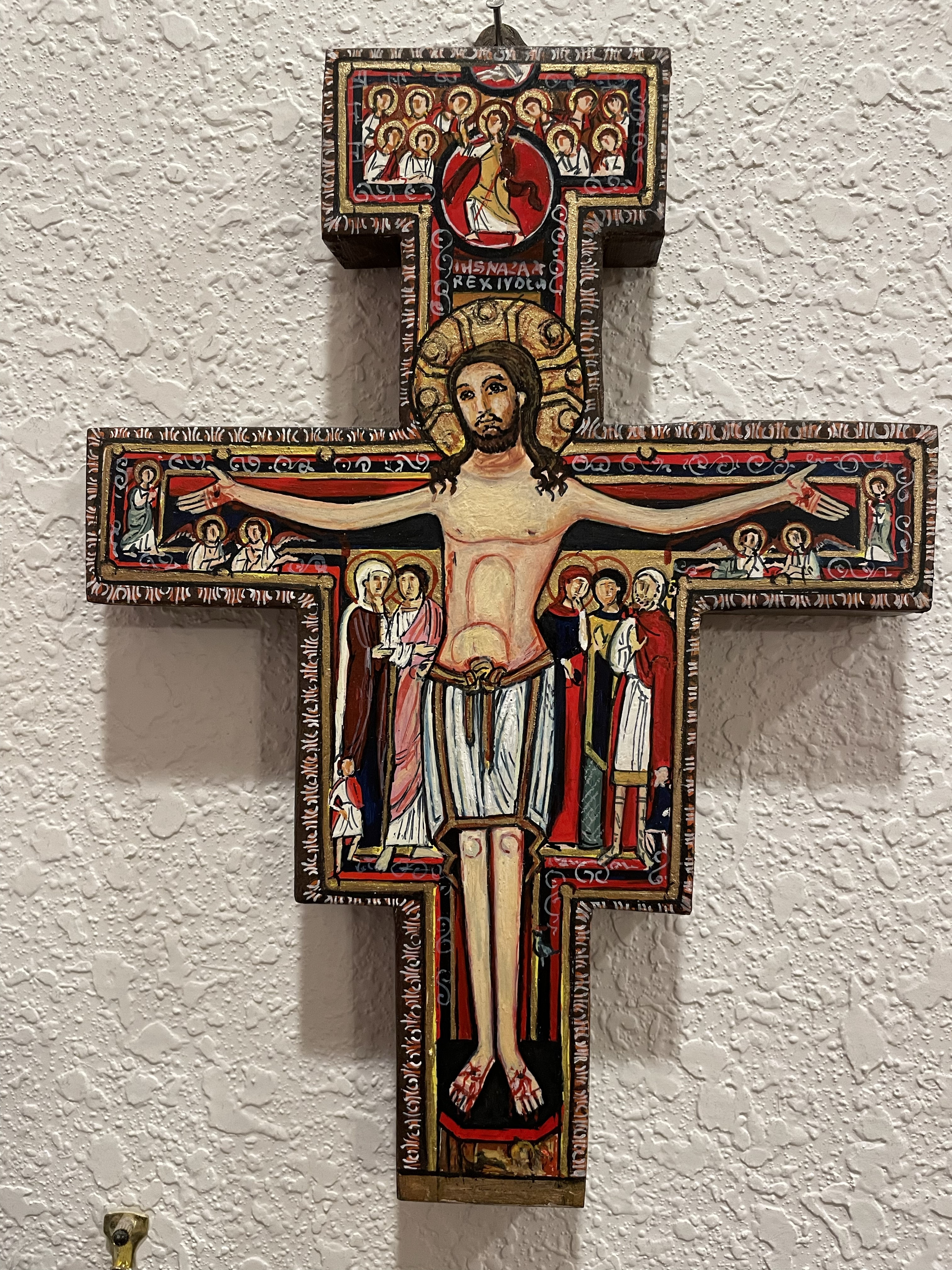
But why start the synod on St. Francis’ feast day? I was looking tonight at a reproduction of the crucifix of San Damiano, the cross from which St. Francis heard God call him to go and rebuild His church. As often as I’ve prayed before the very same cross that Francis found in the church of San Damiano, what struck me tonight was how crowded it was. Jesus is there, obviously, looking more triumphant than suffering. But he has people (human and angelic) all around him. He is so surrounded that his outstretched arms look like they are welcoming these folks in to an already packed house, as if to say “Come on in! We have plenty of room!”
That is probably not what the 11th century artist intended. It is not what the 13th century St. Francis saw in Assisi. But maybe it’s the right image for this 21st century synodal moment. We have plenty of room. Come on in.
 Reading Francis
Leave a comment